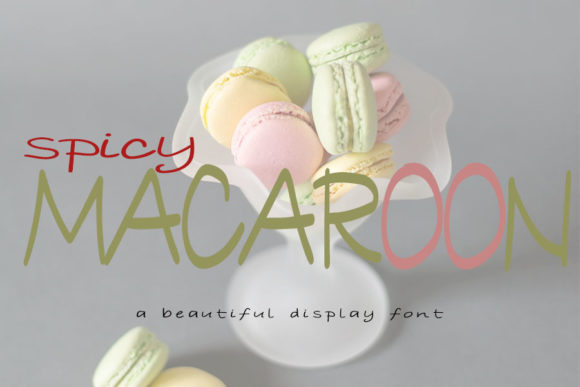
Spicy Macaroon: A Playful Display Font for Digital Branding
I was halfway through refining the hero section of a boutique coaching site when I reached for something that felt both warm and intentional — not too precious, not too generic. That’s when I dropped Spicy Macaroon into the headline. Instantly, the tone shifted: friendly but focused, human but polished. It wasn’t just decorative — it carried voice. As a web designer who spends more time testing type than tweaking shadows, I knew this was worth exploring beyond a single mockup.
What Makes Spicy Macaroon Stand Out in Web Layouts
Spicy Macaroon is a display font — designed not for paragraphs, but for presence. Its rounded terminals, gentle bounce, and subtly uneven baseline give it that handmade charm without sacrificing digital clarity. Think of it as the typographic equivalent of a well-curated Instagram feed: approachable, intentional, and quietly confident. It’s not trying to be everything — it’s designed to anchor attention, signal personality, and elevate a moment of visual communication.
In practice, it shines where hierarchy matters most: hero headlines, section titles, call-to-action buttons, and branded banners. On a recent product landing page, I used Spicy Macaroon for the primary headline (“Your First Step Starts Here”) over a soft gradient background. Paired with a clean, neutral sans serif (Inter, set at 18px) for body copy, the contrast created immediate breathing room — and made the message feel both personal and professional.
Real-World Performance Across Devices and Contexts
One of my first tests was responsiveness. I checked how Spicy Macaroon rendered on mobile — especially at smaller heading sizes (H3 and H4). At 24px and above, it holds its shape beautifully on iOS and Android. Below 20px, some of the finer details — like the delicate curve on the lowercase “a” or the subtle tail on the “y” — begin to soften. That’s expected for any expressive display font, and honestly? It’s fine. Because Spicy Macaroon isn’t meant for navigation menus or form labels. It’s meant for moments you want people to *feel*, not just scan.
I also tested it over image overlays — a common need for portfolio sites and campaign pages. With light letter spacing (+20–30 units) and a subtle text shadow (1px black at 20% opacity), it stayed legible even against textured or busy backgrounds. No heavy outlines needed. Just thoughtful spacing and contrast.
Where Spicy Macaroon Adds Real Value Online
This font excels in contexts where brand warmth and creative distinction matter:
- Landing pages — Especially for courses, workshops, or creative services where personality is part of the value proposition.
- Portfolio headers — Gives designers, illustrators, and makers an instant signature tone without relying on logos alone.
- Blog headers and featured quotes — Adds editorial flair to long-form content while keeping focus on the message.
- Digital brand kits — Works beautifully in downloadable assets like Canva templates or Notion dashboards where visual cohesion supports usability.
- Online shop banners — Perfect for seasonal promotions (“Summer Studio Sale”) or limited-edition drops where emotion drives action.
It’s also surprisingly versatile across industries: I’ve seen it work well for a ceramicist’s online store, a mindfulness coach’s webinar page, and even a small-batch tea brand’s subscription CTA — each time, reinforcing a sense of care and craft without feeling cutesy or outdated.
Smart Pairings and Practical Considerations
Spicy Macaroon thrives when paired intentionally. My go-to pairing is a highly legible, low-contrast sans serif — like Inter, Poppins, or Manrope — for all supporting text. The contrast between Spicy Macaroon’s playful rhythm and the calm reliability of the body font creates natural visual flow. For more editorial or luxury-leaning sites, a refined serif (like Cormorant Garamond or Literata) can add quiet sophistication — just keep the serif at a slightly larger size or looser line height to avoid visual competition.
Before implementing, I always check what’s included: Spicy Macaroon comes with standard OpenType features, including stylistic alternates and ligatures (great for avoiding awkward letter collisions in words like “coffee” or “welcome”). It supports Latin-based languages and includes web-optimized WOFF2 files — critical for fast-loading pages. And yes, the commercial license covers client work, SaaS dashboards, and embedded digital products — no surprises there.
When to Reach for — and When to Skip — Spicy Macaroon
Use it when you want to:
- Signal creativity, warmth, or approachability in under three seconds.
- Add distinctiveness to a header without overwhelming layout balance.
- Support a brand identity that values handmade authenticity and modern polish.
Avoid it for:
- Body copy, captions under 16px, or interface elements requiring high scannability (like data tables or dashboard labels).
- Situations demanding strict accessibility compliance for WCAG AA/AAA — its decorative nature means it shouldn’t be the sole carrier of critical information.
- Ultra-minimalist or corporate tech brands where neutrality is core to trust.
It’s not a Swiss Army knife — and that’s its strength. Spicy Macaroon doesn’t try to do everything. It does one thing exceptionally well: make digital space feel human.
If your site has been feeling a little too polished — or worse, a little too predictable — Spicy Macaroon might be the gentle nudge your typography needs. Not to shout louder, but to say something kinder, clearer, and more unmistakably *you*.